Angus Campbell
1910 - 1980 · Leiters Ford, Indiana, U.S.
Angus Campbell was an American social psychologist and a prominent figure in the study of electoral systems and political behavior. He was a professor at the University of Michigan and a key researcher at its Survey Research Center, which he directed from 1948 to 1970. His work significantly influenced the understanding of how citizens perceive their ability to impact the political process, a concept he helped introduce as political efficacy.
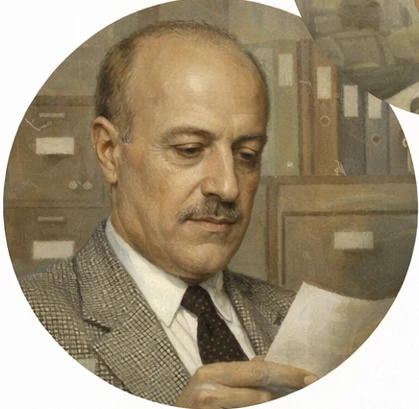
File:Angus Campbell - psychologist - University of Michigan, 1948.jpg
Author: University of Michigan. News and Information Services. Photographs
License: CC BY 4.0
Life & work
Overview
Angus Campbell was an American social psychologist and a prominent figure in the study of electoral systems and political behavior. He was a professor at the University of Michigan and a key researcher at its Survey Research Center, which he directed from 1948 to 1970. His work significantly influenced the understanding of how citizens perceive their ability to impact the political process, a concept he helped introduce as political efficacy.
Key milestones
Timeline
Born
Born in Leiters, Indiana.
Bachelor's Degree
Received his B.A. from the University of Oregon.
Master's Degree
Received his M.A. from the University of Oregon.
Doctorate Degree
Completed his Ph.D. at Stanford University.
Co-founded Survey Research Center
Co-founded the Survey Research Center (SRC) at the University of Michigan.
Director of Survey Research Center
Began serving as Director of the Survey Research Center.
Published 'The Voter Decides'
Co-authored 'The Voter Decides', a book that introduced the concept of political efficacy.
Published 'The American Voter'
Co-authored 'The American Voter', a seminal work in political science.
Director of Institute for Social Research
Became Director of the Institute for Social Research (ISR).
Published 'The Quality of American Life'
Co-authored 'The Quality of American Life: Perceptions, Evaluations, and Satisfactions'.
Died
Died in Ann Arbor, Michigan.
Published 'The Sense of Well-Being in America'
His book 'The Sense of Well-Being in America: Recent Patterns and Trends' was published posthumously.
Signature work
Discovery Story
Angus Campbell, along with Gerald Gurin and Warren E. Miller, introduced the concept of political efficacy and its measurement through survey questions in their 1954 work 'The Voter Decides'. The Political Efficacy Score (Average) equation (E = T/N) represents the fundamental method used to quantify this concept based on survey responses.
Key contributions
Achievements
Co-authored 'The Voter Decides' (1954), which introduced the concept of political efficacy.
Co-authored 'The American Voter' (1960), a seminal work in political science.
Contributed significantly to the development of survey research methods for studying political attitudes, co-founding the Survey Research Center at the University of Michigan and directing it from 1948 to 1970.
Notation used
Symbols & Variables
Geographic context
Birthplace
Leiters Ford, Indiana, U.S.
Citation
Reference
University of Michigan Bentley Historical Library, 'Angus Campbell Papers, 1949-1980'
Common questions
Frequently Asked Questions
Angus Campbell was an American social psychologist and a prominent figure in the study of electoral systems and political behavior. He was a professor at the University of Michigan and a key researcher at its Survey Research Center, which he directed from 1948 to 1970. His work significantly influenced the understanding of how citizens perceive their ability to impact the political process, a concept he helped introduce as political efficacy.
Angus Campbell lived 1910 - 1980.
Angus Campbell is associated with Sociology, Political Science, Psychology, Data.
Angus Campbell is most strongly associated with the Political Efficacy Score (Average).
Angus Campbell, along with Gerald Gurin and Warren E. Miller, introduced the concept of political efficacy and its measurement through survey questions in their 1954 work 'The Voter Decides'. The Political Efficacy Score (Average) equation (E = T/N) represents the fundamental method used to quantify this concept based on survey responses.
Co-authored 'The Voter Decides' (1954), which introduced the concept of political efficacy. Co-authored 'The American Voter' (1960), a seminal work in political science. Contributed significantly to the development of survey research methods for studying political attitudes, co-founding the Survey Research Center at the University of Michigan and directing it from 1948 to 1970.
Angus Campbell was born in Leiters Ford, Indiana, U.S..
Angus Campbell was associated with country code US.